Girl Design: MDM Journal
Why?
I want to try getting into the habit of documenting my design process. Figured the best way would be to do a short game jam to start with. I also wanted to challenge myself here (because why not). And what better way to do that than attempting to crunch a 10-day game jam into ~24 hours? Will it be good? Who knows. Will my 4am entries make sense? I would hope so. But I'm curious to see how it'll work out, and if I can balance both the production and design process documentation within this time crunch.
Process Journal
Timezone: EEST
25/10/25, 4PM - HOUR 1
I’ve done more game jams than I can count at this point, and for shorter jams ( < 48 hours) I tend to stick to a few simple principles.
- Play to my strengths.
- Try out something new, but in a small, manageable way.
- Keep the scope small. (!! beware of scope creep)
- Most importantly: it has to be something I’m genuinely excited to work on.
But then.........the theme of the jam was revealed and........

One can practically feel the intended energy — a soaring, motivational call to create something about empowerment, or womanhood or growth, probably with some light ethereal music swelling in the background.
Which is great!!! I appreciate the effort they're putting here, and the creative space they're trying to foster. Except....I do not think I'm in the right headspace for that atm. Nor can I see myself making something substantial or communicate something heartfelt and profound in less than 24 hours. So instead of chasing an emotional revelation, I decided to go a completely different route.
I thought of the idea of being a freelancer with an annoying client, who asks you to do a task over and over again. Each time, the requests are more and more ridiculous, until you reach your limit, and step outside for fresh air (touch grass literally). I pitched the game to my friends; an artist and a UI/UX designer. I barely finished explaining it before they both started laughing — with the kind of instant recognition of having experienced it themselves. When I asked if they'd be interested to speedrun the jam with me, without missing a beat, they both said yes.
This is usually my favorite kind of game jam idea — something that starts as a joke. All our ideas start with "wouldn't it be funny if....?" and results in a laugh and "oh my god, lets do it". It’s small enough to build, ridiculous enough to keep me motivated at 3AM, and real enough to sting just a little.
Super excited to start working on "Freelancer: Touch Grass Edition" (I just made this up lmao)
25/10/25, 6PM - HOUR 3
Two hours of brainstorming later, here is what the game pitch looks like:
You play as a freelance graphic designer working for an annoying client on a poster. The player completes small design tasks requested by the client — dragging and dropping shapes, doodling things, picking stickers — but after every task, something goes wrong. The file corrupts, a virus appears, or the client decides they hate it. The whole thing resets.
The joke (and the tragedy) is that you keep doing this, over and over, until finally, you give up. You close your laptop, go outside, and touch grass. That moment of peace — reaching nirvana through surrender — is the ending.
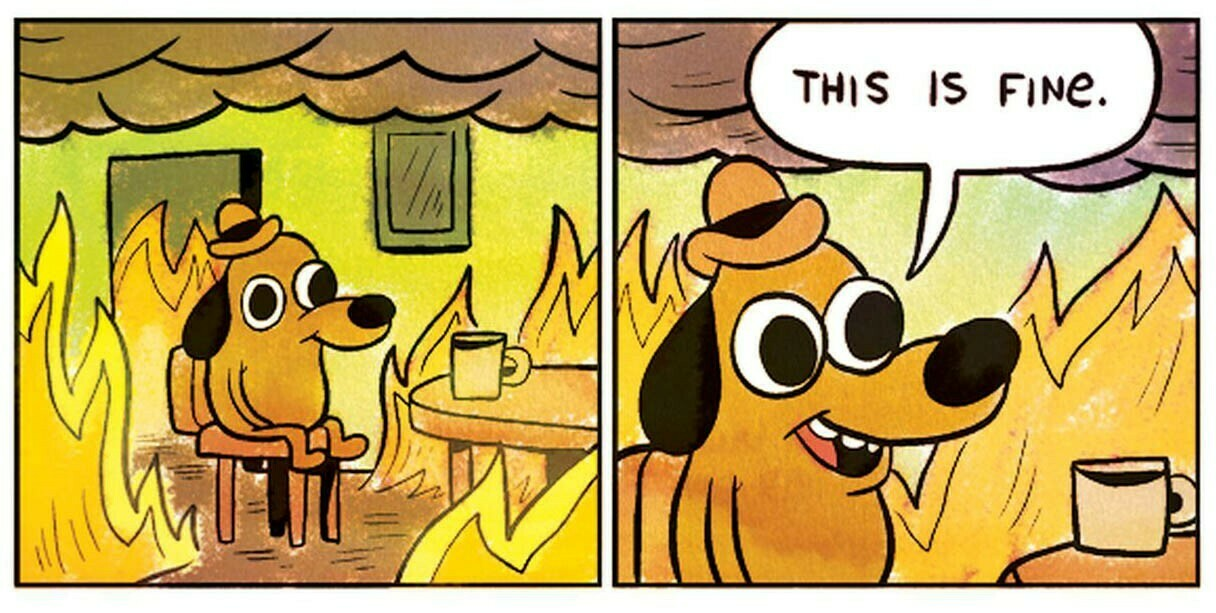
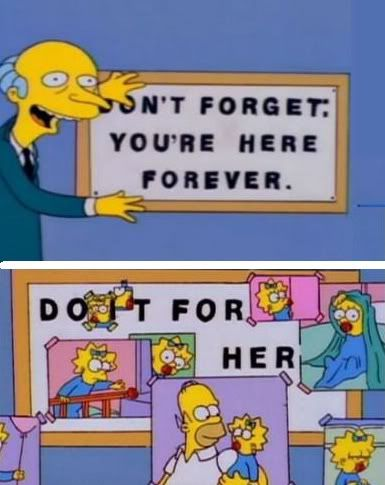
I want the tone to be funny, not cruel. A bit of a “this is fine” kind of humor, with cans of Red Bull littering the workspace, and sticky notes about "doing it for her (cat)".
It only makes sense for the art style to support this. Therefore, it will be crude and crayon-y. A good reference for the art direction would be Consume Me.
Mechanics wise, it'll be a bit simple on the poster designing side. A good inspiration would be Sticky Business, which has both, a similar art direction (cozy/cute/unserious), and mechanics close to what we have in mind.
The main design consideration is that the tone of the game is meant to be comedic, not despairing. In an ideal case, the experience of the game is mildly frustrating, but never punishing enough for the player to be annoyed.
I’m also thinking about how to balance the comedic absurdity with the underlying familiarity of the situation. There’s something very real about losing work, remaking it, and pretending it’s fine. I want players to laugh, but also wince a little in recognition.
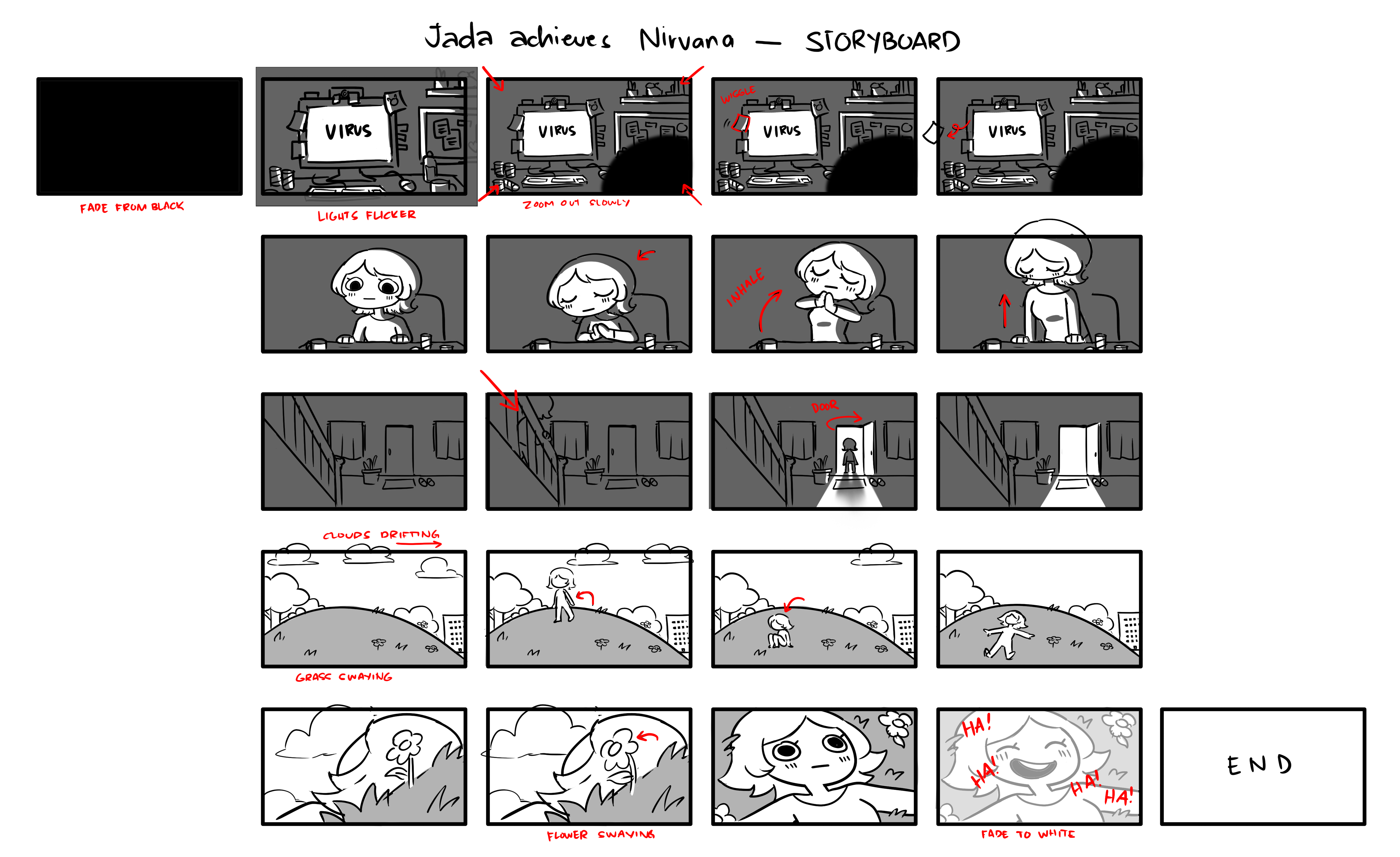
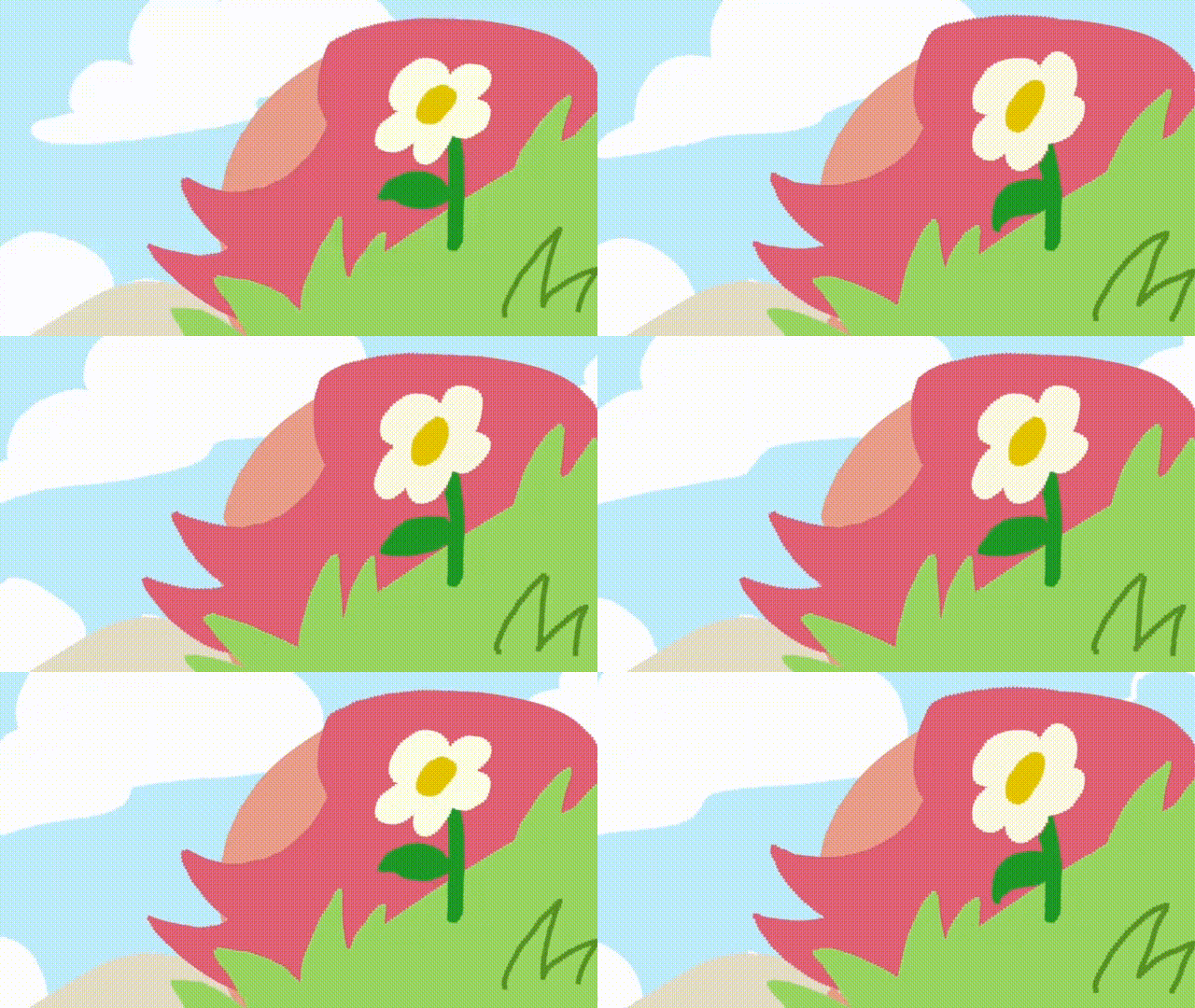
Another "wouldn't it be funny" moment was the idea that our game would be crude and scribbles, but the ending cutscene would be over the top and fully animated. Think of a slow animation, glowing light, grass swaying, as you lie basking in sunlight. A complete tonal shift.
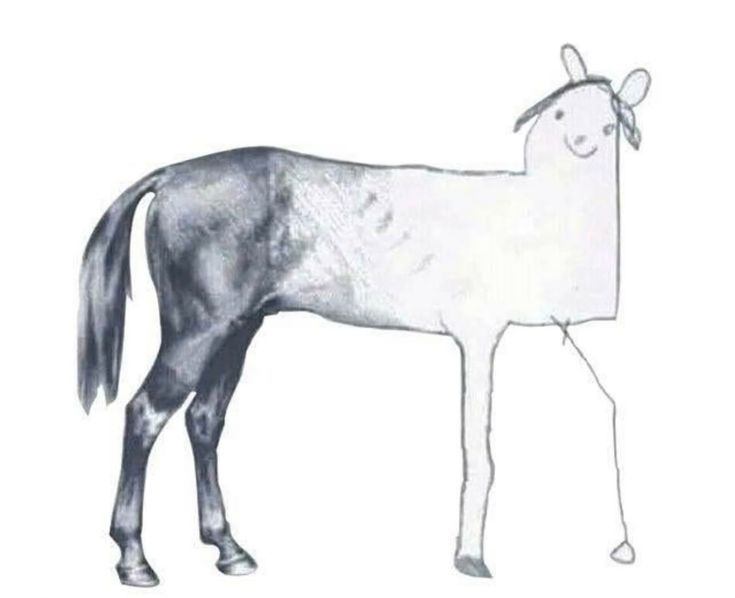
A joke of sorts that we spent all our """budget""" on the ending, that the art had to be compromised. yes.......indeed like the unfinished horse drawing, but the real challenge here is to make sure the intentionality of doing this is reflected. It's meant to be satirical. Players should be able to tell.
Some questions that need to be answered: how much frustration is too much? What kind of requests does the client have? How do I represent “file corruption” visually — glitch effects, scribbles, or maybe a cartoon virus chewing on the file icon?
25/10/25, 11PM - HOUR 7
Steady progress so far — things are moving smoothly with asset production. Just had a long chat about the ending cutscene. The main goal is to communicate some sort of rise to action, suspense, and then what we’ve loosely been calling “nirvana.” Not spiritual nirvana — more like the attaining some sort of deep inner peace that comes from deciding “I’m done” and shutting your laptop for the day. The challenge is that we don’t want the transition to feel like a completely different game. It should still carry that undercurrent of comedy all the way through.
To keep it from being too self-serious, we’re planning to let humor bleed into the ending. Things like intentionally silly footstep sounds — we joked about using the SpongeBob “squeaky boots” walk — to keep the tone grounded in playfulness. The game’s entire appeal rests on that balance between relatable frustration and absurd levity, so the ending can’t suddenly start acting like it’s profound.
What is interesting is that some of our design and art decisions have been influenced by the nature of the jam (women-exclusive). Something I don't think I've ever experienced before.
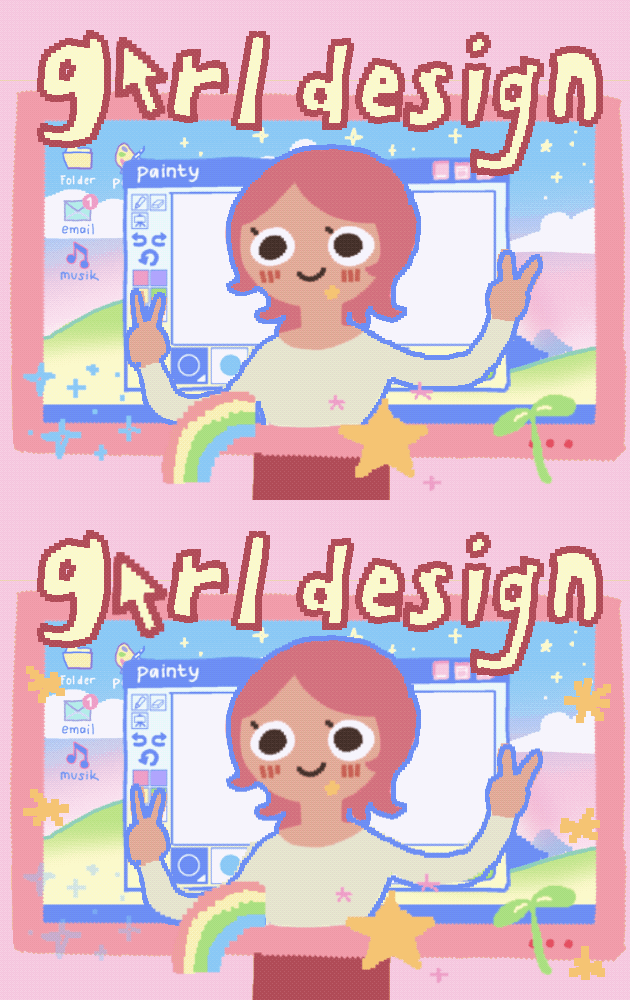
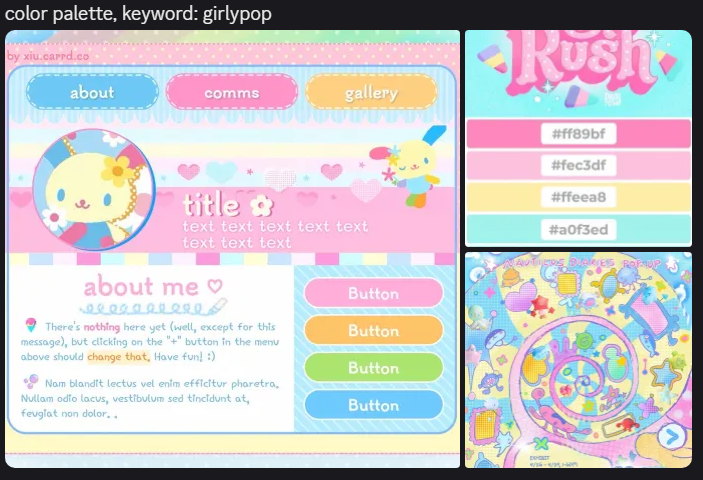
There’s been talk of leaning into a “girlypop” aesthetic — not in the parody, hyperfeminine, pink-for-the-sake-of-pink way, but more as an act of indulgence. A chance to make something bright, and unapologetically cute simply because we can. The UI-designer is particularly interested in it, because surely, where else would she have the chance to do this, besides a game she's making for fun? And who am I to stop her from letting her have that moment.
26/10/25, 12AM - HOUR 8
First Unity Commit lets go!!!!!!
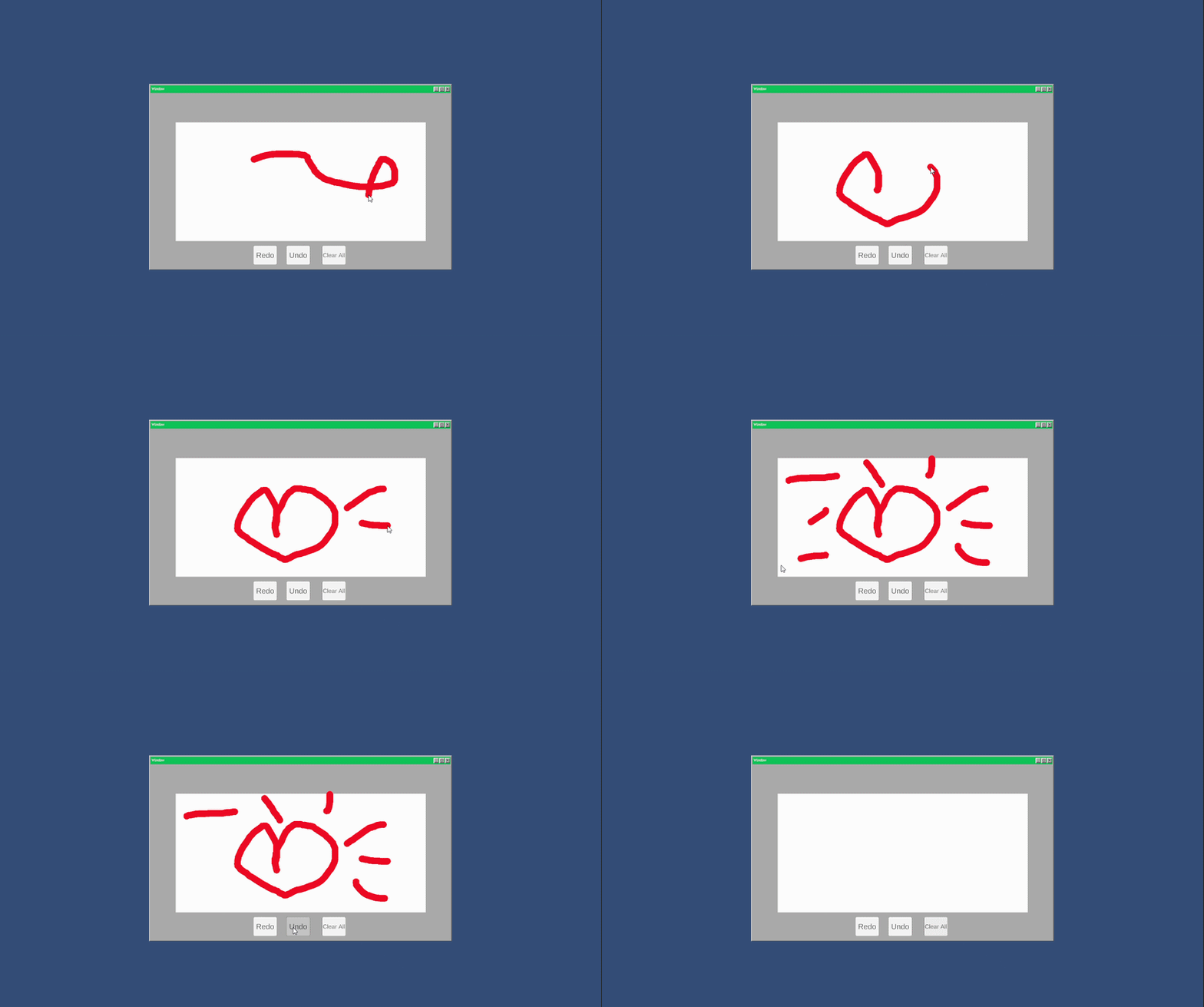
Set up Unity, versiona control and got a v v basic paint editor working for the poster-making tasks. It’s functional, which is honestly all it needs to be right now.
I’ve been unironically researching those “graphic design is my passion” memes. There's something about them being so bad, they're good? I'm going to confess I'm not quite sure what exactly about them makes them so "beautiful" in my eyes.
But what's an interesting thought (and future me problem) is having to playtest the game with players of different age groups and see how it communicates. Yes, we're relying somewhat on meme culture, but the goal is also for the game to be just as enjoyable, if one wasn't aware any of these. Will i have time for that is a different story.
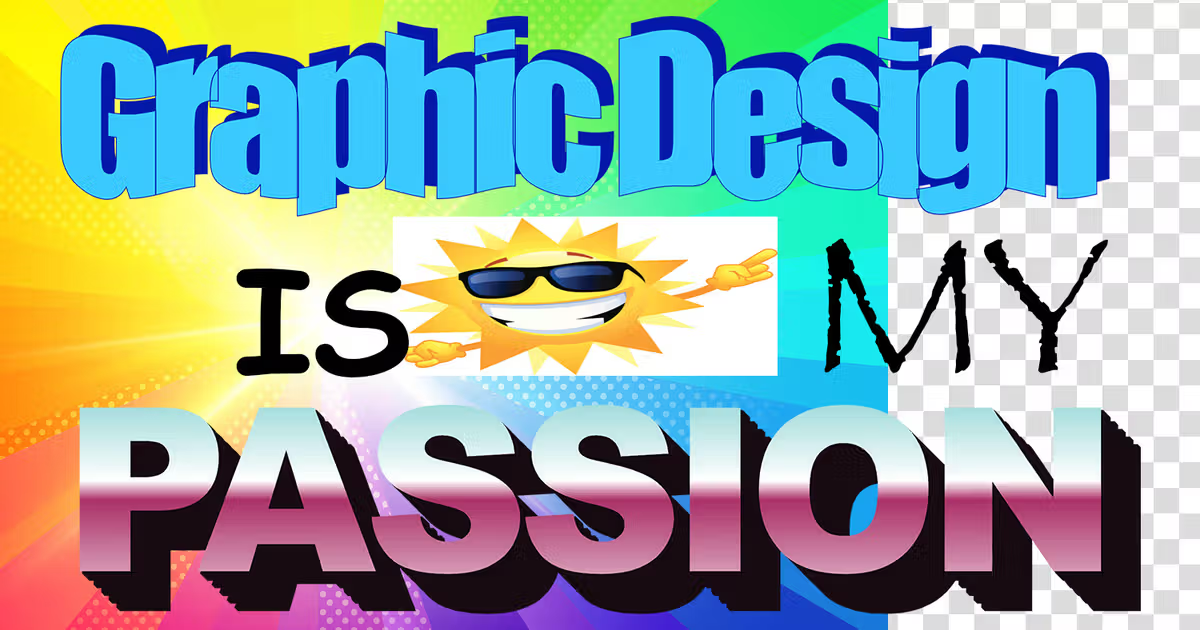
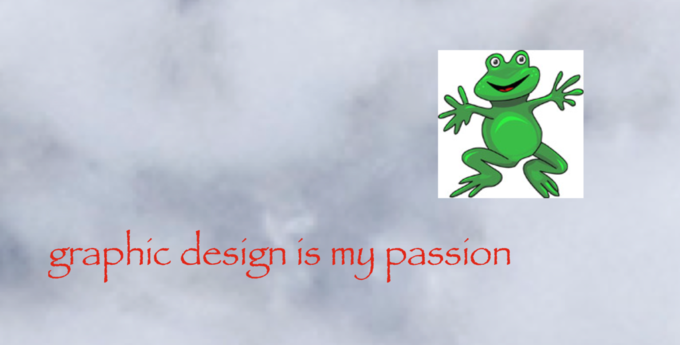
But that's the kind of energy I want the game to radiate. Something that proudly says, “Congrats!!! You did a shit job and it’s great!!!”
Almost as if making the poster was never the point..
26/10/25, 3AM - HOUR 10
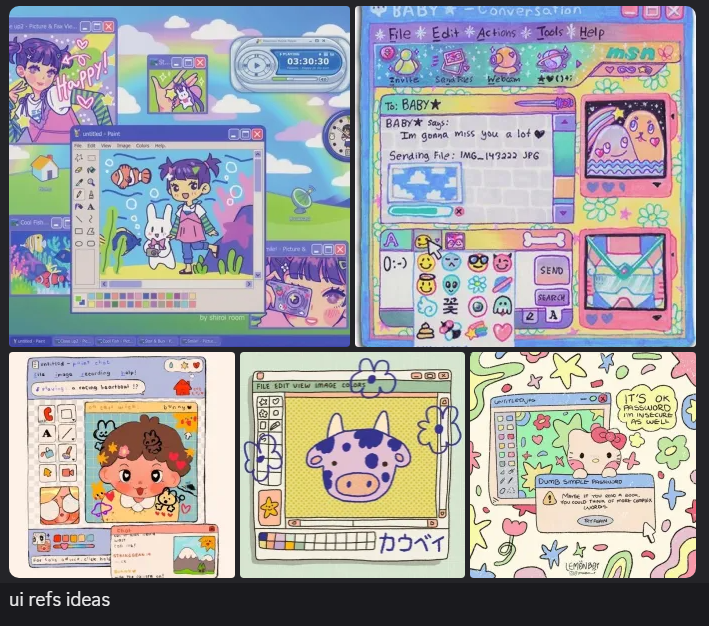
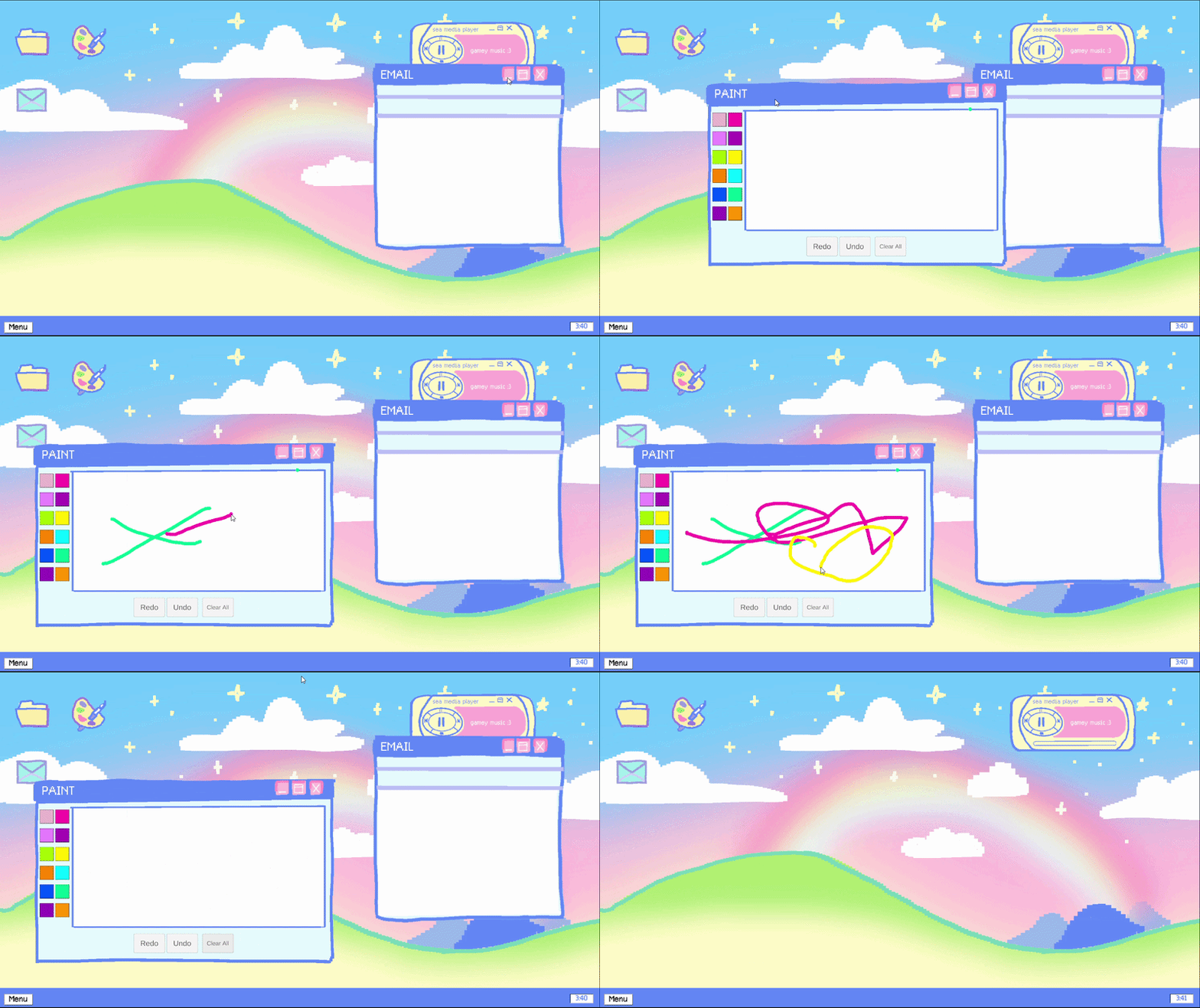
Two mugs of coffee and one painfully stubborn bug later, here we are. The UI ended up leaning heavily into the aesthetic of early Flash games (RIP GirlsGoGames).
In terms of desktop simulation games, on the scale of Emily is Away and Needy Streamer Overload, I’d place the game somewhere in the middle, maybe slightly tilting towards NSO.
There's always an emphasis on playing games, as I consider them just as important part of development as, lets say programming. I recommended a few games to the team for concept art inspiration: Finding Cindrella and Lacey’s Flash Games. They’re niche, underrated gems, but lurking through the depths of itch.io always pays off. I’ve even beta-tested some of these myself before, and analyzing their quirky, small-scale design solutions would most definitely help ours.
26/10/25, 3AM - HOUR 11
(11 or 10 ??? The clocks reset for DST)
4AM ramblings to oneself in a sleep-delirious state
Statement: “The experience of an annoying client as a freelancer is a relatable experience. But I fear that doubling down on the pink aesthetic will make it far less relatable to a big chunk of players.”
Question: “What exactly makes it less relatable?”
Concern: The pink aesthetic may make a certain group feel alienated.
Clarification: The concern here isn’t “oh no, fewer players will play the game,” but rather that the distaste for the aesthetic will cause some players to hyperfocus on it and miss the actual point of the game.
Reflection: The emotional labor of appeasing certain groups of people is irrelevant. The point of the game was humor— and fun — and neither should be compromised to cater to those who dismiss it on sight.
Conclusion: Girlypop core stays winning.
26/10/25, 6PM - HOUR 18
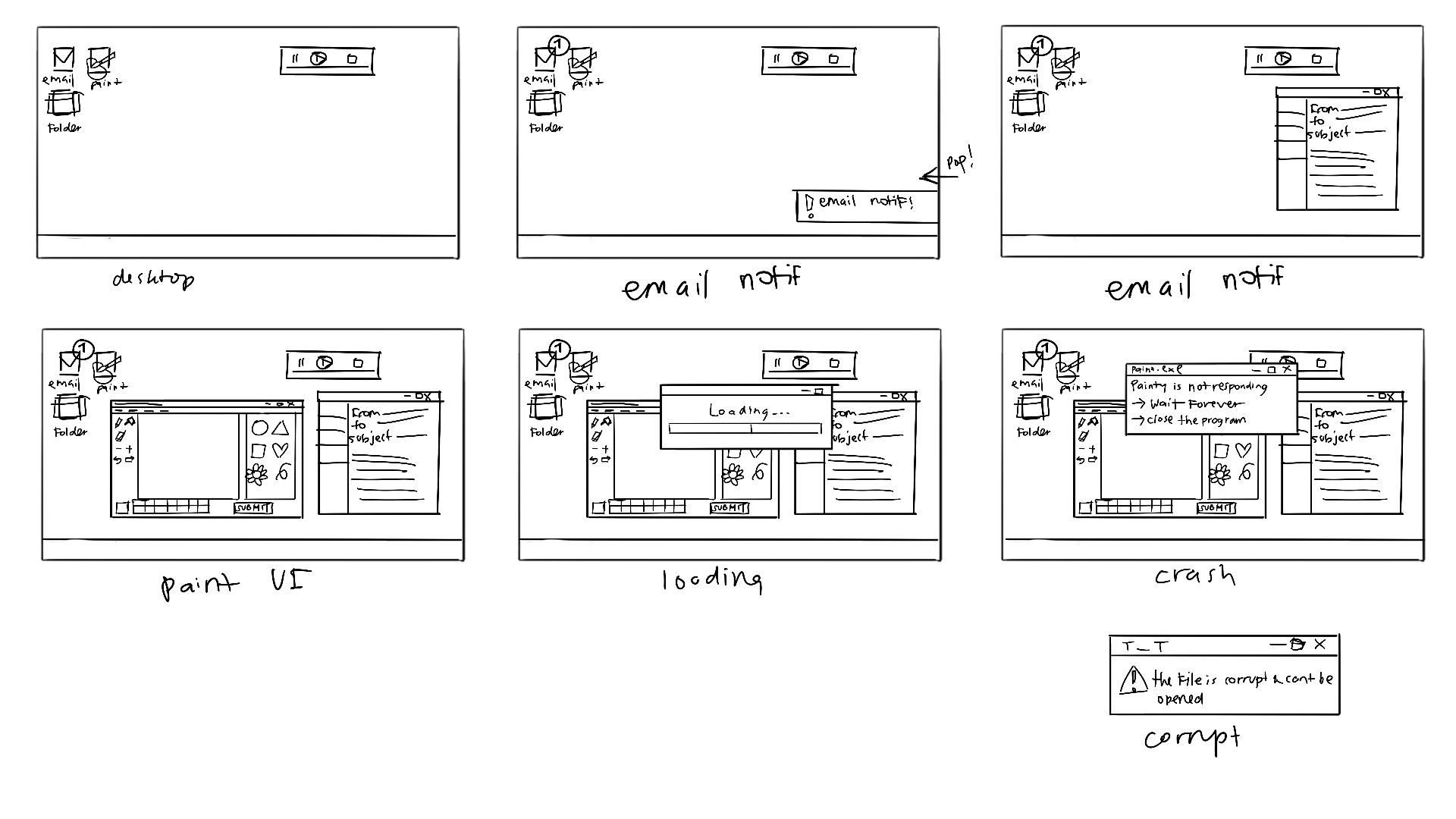
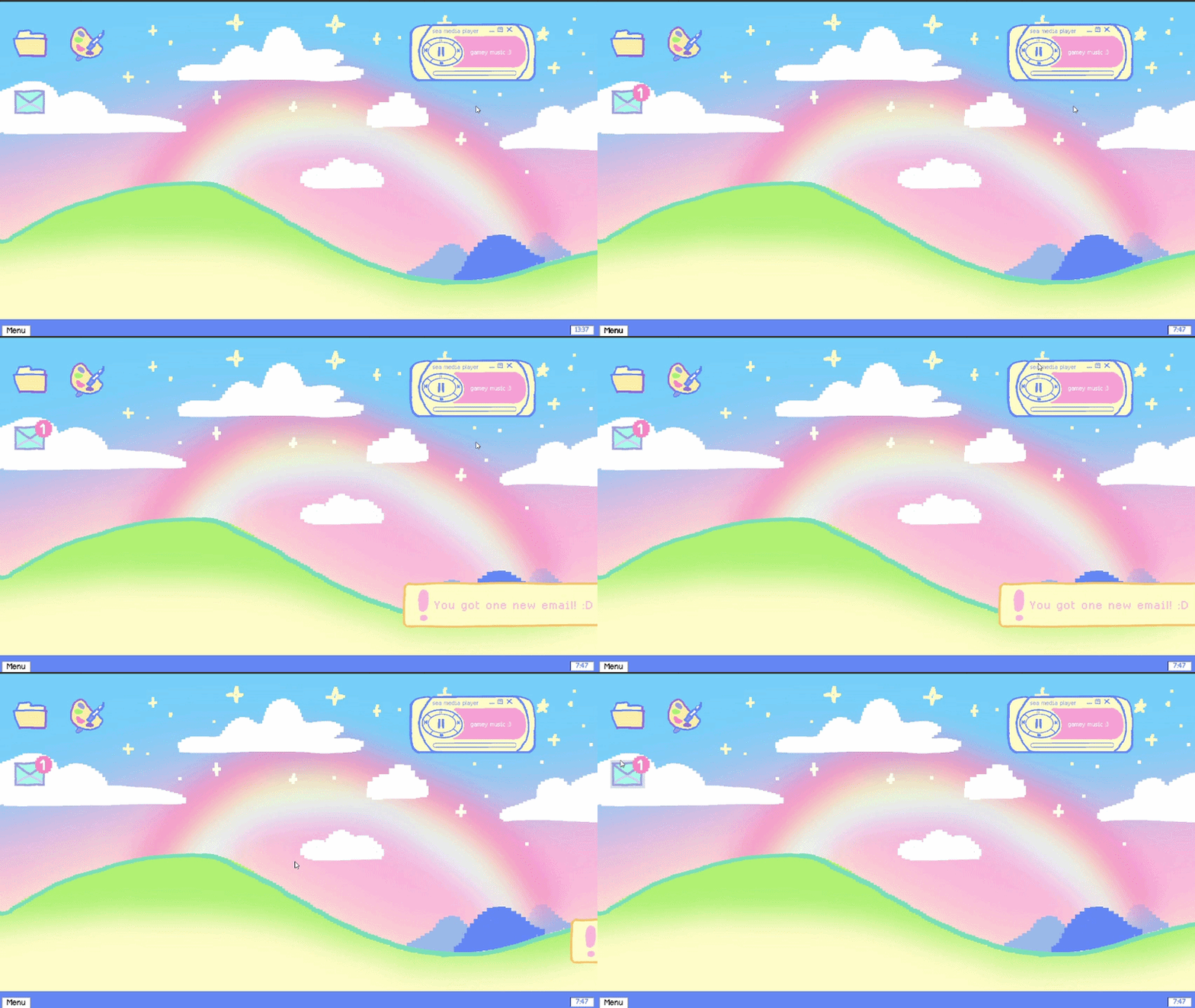
Six hours of programming later: 500+ lines of code, bug fixes, and a working progression system (emails, stickers, notifications, submissions). Not bad for a single sitting. ALOT of visual polish needed, but it's a stretch goal, and atleast the main systems are in.
Design accessibility notes: the original plan was to let players save posters on the desktop and manually drag them into emails as attachments — cute, but maybe too fiddly for now. For simplicity’s sake, I went with a single “Submit” button. It’s quick, functional, and keeps players in the flow.
I’m curious to see if playtesting will prove this the better choice, or if I’ll regret not going for the more intricate, “drag-and-drop” approach. I keep asking myself whether simplicity or intuitiveness is more important — but since it’s a jam, simplicity wins (for now).
Time to step away from the screen for a bit before my last functioning braincell dies.
28/10/25, 6PM
I’d like to think I’ve played most, if not all, of the UI-based and chat-sim games out there—partly out of curiosity, but partly for research for a Kickstarter project I’ve been working on. Games like Emily Is Away, Mystic Messenger, A Normal Lost Phone, and Needy Streamer Overload have all shaped the way I study interface-as-play.
I feel like the essence of a good UI game comes from the game feel. Yes, they may be lower in scope or budget, considering they require less traditional art, but at the same time, that means they have less to rely on for a satisfying experience. Personally, the best UI games I’ve played have a subtle polish that makes every click, drag, and sound cue feel intentional. They need to feel good to interact with. Every motion and sound works together to create this illusion that you’re part of a real interface; something that feels alive.
It’s something I want to focus on more: making every interaction deliberate and, if nothing else, immersive. The game should invite the player to feel like they’re doing something, even if what they’re doing is ultimately mundane. With that same logic, the app-crashing scene was intentionally made long—over eight seconds—to convey a sense of genuine frustration. The game feels like it’s hung, and your progress resets. You're meant to hate this.
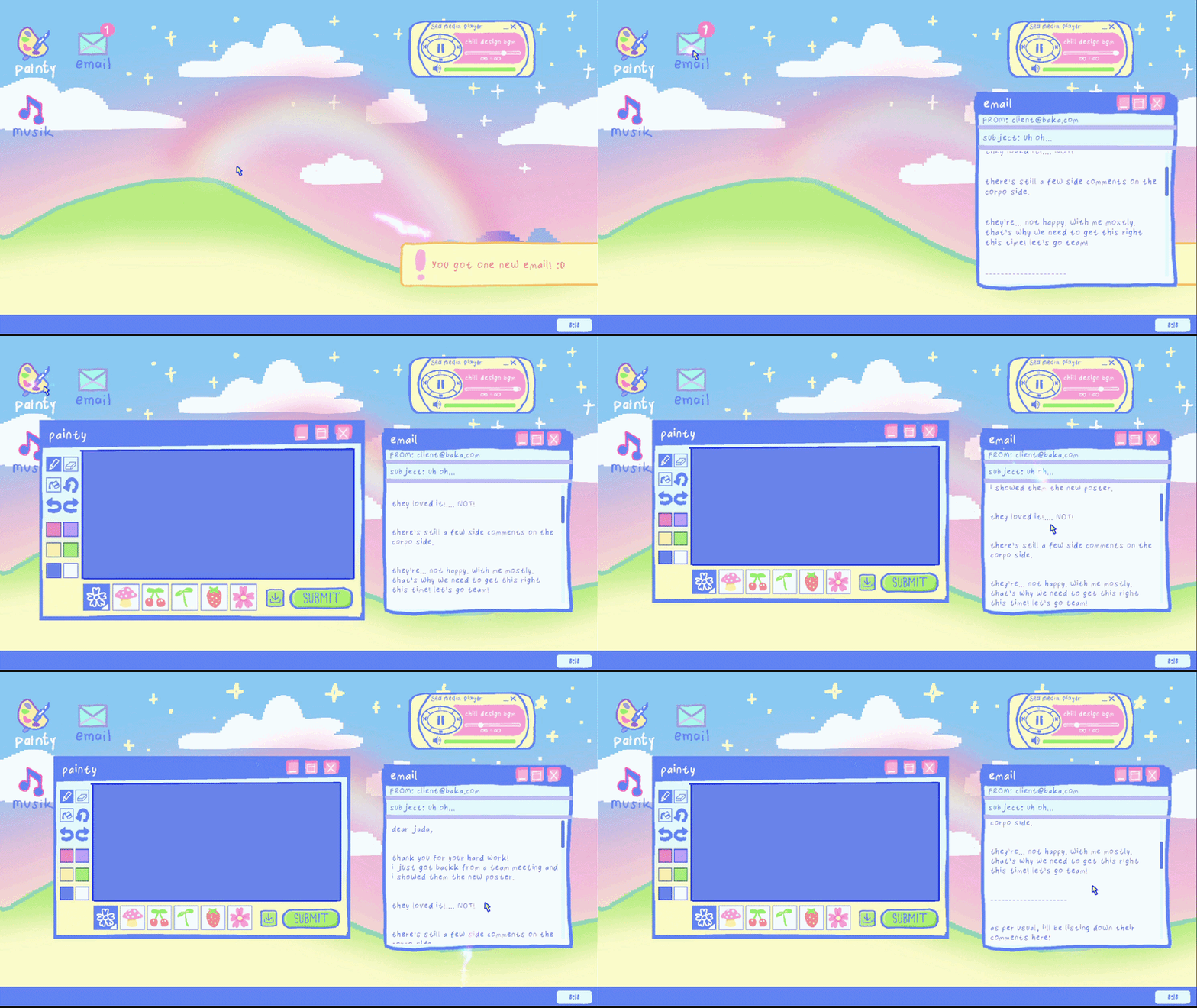
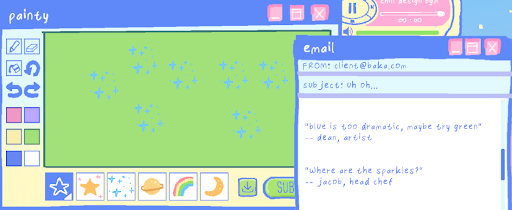
The rest is tying it all together: writing the emails, structuring the tasks, and shaping the client’s demands. An accidental win was the second request. Visually, the green background with blue sparkles looks awful, but we decided not to change it, because perhaps that was the whole point. It communicates a client with no aesthetic sensibility whatsoever—someone who confidently asks for the worst possible combination because they don’t know what they want. And you, a cog in the system, will do it anyway, even if it feels like artistic self-sabotage.
In terms of code architecture, I made sure to keep it broad enough that it’s very easy to scale. (in an ideal world where I wasn't on a time crunch, these would be moved to ScriptableObjects, but eh, this works for now). Quite happy with how it turned out in the end.
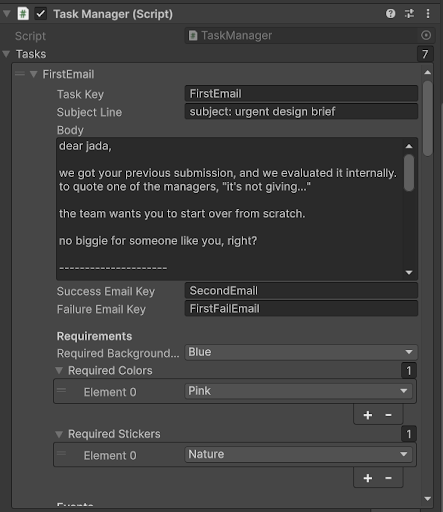
And finally, we submitted! There was a lot of crunch involved, but it was the only way we could have finished on time with the little free time we had. No regrets so far.
29/10/25, 10AM
💡 Playtesting Notes
- A playtester or two completely missed the email prompt at the start and went straight to the paint editor instead. One said the he “never reads texts in a game, never will.” Honestly? Not surprised.
- Unintentional emergent playstyle: some players genuinely enjoyed the game purely as a silly little paint app. They never touched the objective and just made weird art for fun. Honestly kind of a win because it means the core interaction is entertaining on its own.
- Everyone vibed with the music. It fits the theme well.
- General sentiment from players who did follow the tasks:
- “Painfully relatable.”
- “I love the art! It’s so silly.”
- “Is this freelancer simulator™.
- Need to clarify the drawing vs. sticker distinction. Some players kept drawing flowers/shapes instead of using the stickers. The wording in the tasks needs to be more literal and explicit.
- Bonus: Watching players actually draw their own interpretations of the prompts was entertaining in its own right. I wonder if instead of a simple download button, how an in-game art gallery where players can view or collect their creations would work. Something like the Sims Gallery
💡 Accessibility Notes
- Make the purple and blue shades more distinct. A player used them interchangeably, which suggests the palette isn’t communicating clearly.
- Highlight text using the color it’s asking for to help readability.
- Maybe add simple shapes or patterns to the color swatches to make them more accessible for color-blind players?
- Consider adding a subtle hover/outline to indicate which tool is selected.
- There is no way to undo once you’ve reset the canva. (was intentional as its the simplest to program). But since it doesn't replicate exactly how a real paint app works, it breaks immersion.,
💡 Win
A playtester (an artist) instinctively pressed Ctrl + Z to undo a mistake, and was confused when it didn’t work. Honestly? It wasn’t something I had even considered, therefore didn’t implement., But the fact that he was immersed in the interface enough to act like it was real software, is such a big compliment. To me, that’s a good success metric: he stepped fully into the magic circle, even if just for a moment.
29/10/25, 5PM
I’ve thought long and hard about whether it makes sense for me to write about this in a journal. But because it does affect my design decisions and creative process, I’ve decided it’s worth sharing. I will attempt to reflect on this objectively (and not rant).
In my experience, making games as a hobbyist and making games (as a hobby) while you’re an active part of the games industry are fundamentally different endeavors. As a hobbyist, you’re free to explore whatever you like, unburdened by external expectations. But once you step into the industry, your background, your privileges, your identity, and the image you project all begin to shape—and in many ways constrain—what you feel you can make.
Had this been my first year in the games industry, creating a game like Girl Design would have been nearly impossible—or at least, not without anxiety. As a female programmer trying to establish credibility, I already felt I had to work twice as hard to be taken seriously. Admitting that I played games often perceived as “feminine” felt like I would reinforce a stereotype I was trying to avoid, so I wouldn’t even bring them up in discussions. On top of that, there seems to be a pervasive tendency to dismiss anything remotely pink or cute, regardless of its complexity. Somehow, the color pink alone can make a game feel “less serious,” even if the underlying mechanics are solid.
It’s only now, after several years in the field, that I feel sufficiently skilled and secure enough to make a game purely because I want to. I can create something unapologetically silly, cute, and irreverent because I trust that my technical abilities speak for themselves.
Working on Girl Design has also exposed me to some uncomfortable but important conversations. A few recent examples:
- Last week, after attending a talk on women in esports, a classmate asked me if avoiding FPS games was a “skill issue.”,
- One hour before submitting the jam, a programmer I admire glanced at the game and dismissed it as a “cute attempt.” After playing it, he admitted it was impressive for a two-day jam and proceeded to express frustration that the jam was women-only. “It’s a well made game....for a girl”, he jokes lightheartedly.,
- This week, a dear friend expresses discomfort over the idea of women-exclusive events. “Inclusivity is exclusive,” he says. This ends in a 4 hour discussion. Let’s just say a lot of hurt was involved.,
- “Have you considered that perhaps it's not because you’re a woman? Perhaps it's your personality or voice?” — response when explaining lived experiences of discrimination.,
And just like that, my silly little game somehow sparked conversations I didn’t even anticipate or fathom. I’ve found a new litmus test question: “What do you think about women-only events?” I’ve started asking it to the men around me. So far, the answers have been… underwhelming, which makes me appreciate even the bare minimum.
The responses so far have been mixed, revealing assumptions I hadn’t anticipated, such as:
- “Such events are good, but they should be for those less privileged… like the ones in villages. You’re empowered enough. You’re in Europe!”,
- “You mustn't make everything about gender. ”,
- “I am all for these events, but why can’t I (read: cis white man) join in anyway? Why not have a quota perhaps?”,
All I wanted was to make a game I wanted to make. But much to my distaste, I am forced to consider my position as a dev against my gender. As a female programmer, I have never cared too much. I knew what STEM was going to be like, so I was prepared. And even if I’m not taken as seriously as my peers, I will simply become better than them to the point that its hard to ignore my opinions. As a female gamer, though, I’ve avoided certain online games and communities for years. Past experiences of being flamed took the fun out of it, so I just… opted out. But these recent conversations made me realize that I’ll get the same comments either way—whether I’m actually in the lobby or nowhere near it. And somewhere in that realization came an uncomfortable truth: by avoiding certain genres, I’ve also been cutting myself off from experiences that could genuinely help me grow as a designer. Not deliberately—just out of self-preservation. So perhaps it’s time to try them again… for research, if nothing else.
31/10/25, 12AM
Okay, enough about the depressing reflections—let’s talk numbers. Our silly girlypop game somehow got 47,000 views and 1,200 plays within two days of release — with zero marketing. #notclickbait #iamabot
To our surprise, the game analytics kept climbing. Just two days in, we had 47k impressions, 2k views, and 1.2k plays, and the ratings/comments were incredibly positive. And then it grew even more.
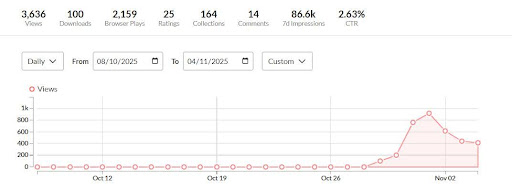
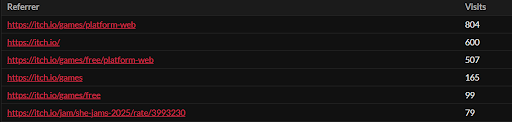
Usually, jam games get their traffic from the jam page itself. That’s the norm. But Girl Design ended up being featured on itch.io’s front page, and even more absurdly, stayed in the New & Popular section for several days. The fact that it lasted more than a day is wild — especially considering how many new games appear on itch every single hour. And just like that… my most low-effort, somewhat-controversial jam entry somehow became my most successful jam game?
I honestly think the thumbnail played a huge role. It was silly, pink and aggressively “this was made at 3 a.m. by someone who hasn’t touched grass.” It stood out — not because it was polished, but because it was funny. But other than that, I genuinely have yet to figure out the reason for its success.
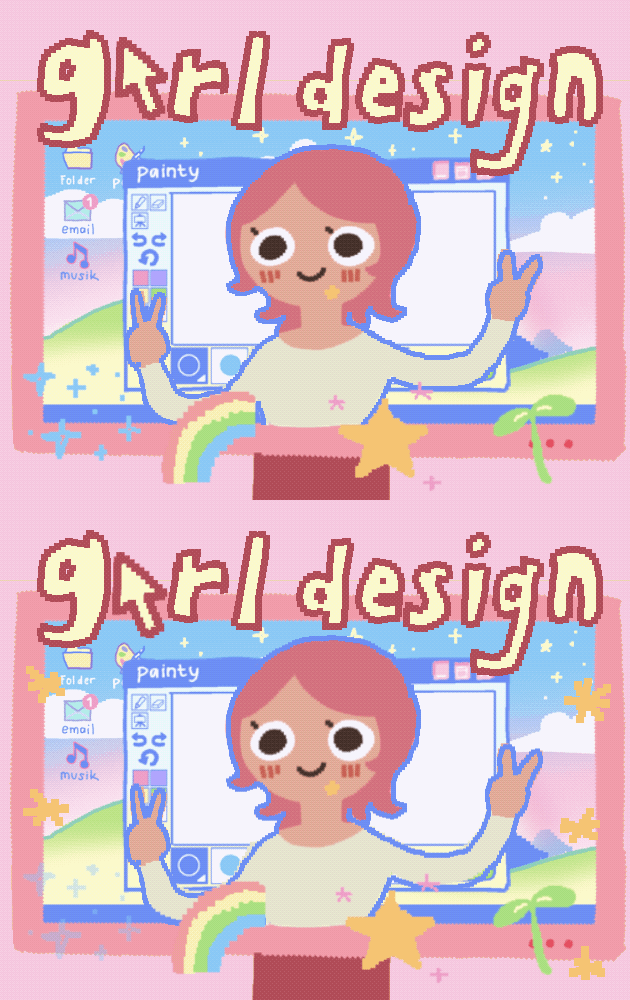
Is it because we made exactly the game we wanted, without worrying for once about player expectations? Is it because the aesthetic was loud and unapologetically crude? Is it…the pink?
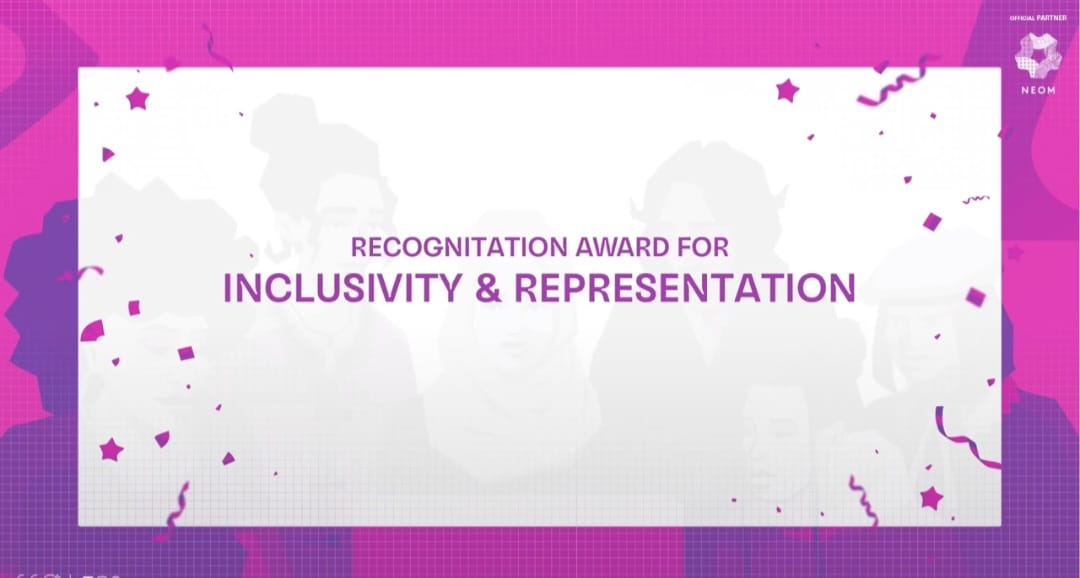
We also ended up winning an award from the jam — the [checks notes] “Recognition Award for Inclusivity & Representation” for “authentic storytelling.” Whatever that means. There were definitely games that tackled heavier, more thoughtful themes than ours, and honestly deserved this more than we did. As mean as it sounds, I can’t help but wonder if the judges felt the need to acknowledge us in some way simply because it was one of the jam’s favorite games….Or maybe they just really liked the thumbnail.
Either way, it feels strange. I have mixed feelings about the game. This was the first thing I’ve made in years where I wasn’t trying to prove anything — not my skill, not my legitimacy as a dev or a programmer. We just made something stupid and honest and fun, and people connected with that well enough.
And despite all the side-effect hate, the awkward conversations, and the emotional labor I somehow ended up doing along the way, I don’t regret making it for a second. If anything, this jam reminded me that sometimes the work that resonates most is the work that isn’t trying to — the work that simply exists because you wanted to make it.
02/11/25, 3AM: FINAL
The team got together to wrap up the jam and talk through our overall feelings about the project. We were admittedly still a bit sour about that friend’s comment, but putting that aside, we realized how genuinely therapeutic this whole experience was. We needed to make something like this — something silly and self-indulgent and ours — and we have zero regrets. We also went over the practical stuff:
A surprisingly wholesome end to a surprisingly chaotic jam.
Post Mortem
- Bugs to fix: layering issues, fixing the undo/reset button, and figuring out why the download button refuses to behave in WebGL.
- Polish suggestions: rewriting some emails, adding more accessibility features, and exploring potential expansions.
- General sentiment: despite everything, we do want to keep working on the game.
- Reception: overwhelmingly positive so far. Many found it super relatable and cozy. A VTuber even played through it twice!
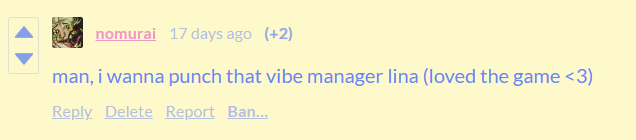
Special shoutout to my favorite comment.
The game itself and the GDD for it can be found here.
Girl Design by Alina, Diandra Kathyusha, Janne 🌼